Tentang Jurnal Ini
About The Journal
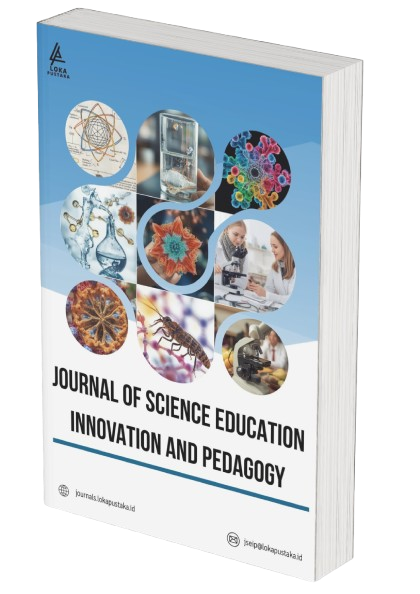
The Journal of Science Education Innovation and Pedagogy (JSEIP) is peer-reviewed, open-access journal dedicated to publishing high-quality, transformative research at the intersection of scientific discipline, instructional technology, and learning theory. In an era of rapid digital transformation and evolving societal needs, science education must constantly adapt. This journal provides a vital, scholarly platform for exploring how innovative methodologies and modern pedagogical frameworks can reshape science learning across primary, secondary, and higher education levels.
Our primary objective is to bridge the gap between rigorous educational theory and practical classroom implementation. By publishing cutting-edge empirical studies, conceptual frameworks, systematic literature reviews, and insightful case studies, the journal aims to elevate the standard of science teaching globally, foster deep scientific literacy, and equip learners with the critical thinking and creative problem-solving skills necessary for the 21st century.
Focus and Scope
The Focus and scope of the journal encompasses, but is not limited to, the following thematic areas:
- Pedagogical Transformations: Evaluation of contemporary instructional models and their direct impact on cognitive, affective, and psychomotor learning outcomes.
- Digital Learning Environments & EdTech: The design, implementation, and evaluation of digital tools in the science classroom, including interactive e-modules, virtual and augmented reality (VR/AR), computer-based simulations and artificial intelligence (AI) in education.
- Ethnoscience & Culturally Relevant Pedagogy: Research investigating the integration of local wisdom, traditional knowledge systems, and cultural artifacts into formal science curricula to make learning more contextual, meaningful, and inclusive.
- Scientific Literacy & High-Order Thinking Skills (HOTS): Strategies and empirical evidence focused on developing students' critical thinking, creative thinking, analytical reasoning, and data literacy within the scientific disciplines (Physics, Chemistry, Biology, and Earth Sciences).
- Curriculum Development & Policy Reform: Analysis of macro- and micro-level science curricula, assessment methods, educational policies, and their alignment with global educational shifts.